
Do Restaurants Charge More on DoorDash? Often, and Here's Why
Many restaurants price items higher on DoorDash and Uber Eats than in store. Where the difference goes and how to set fair app prices.
In this article
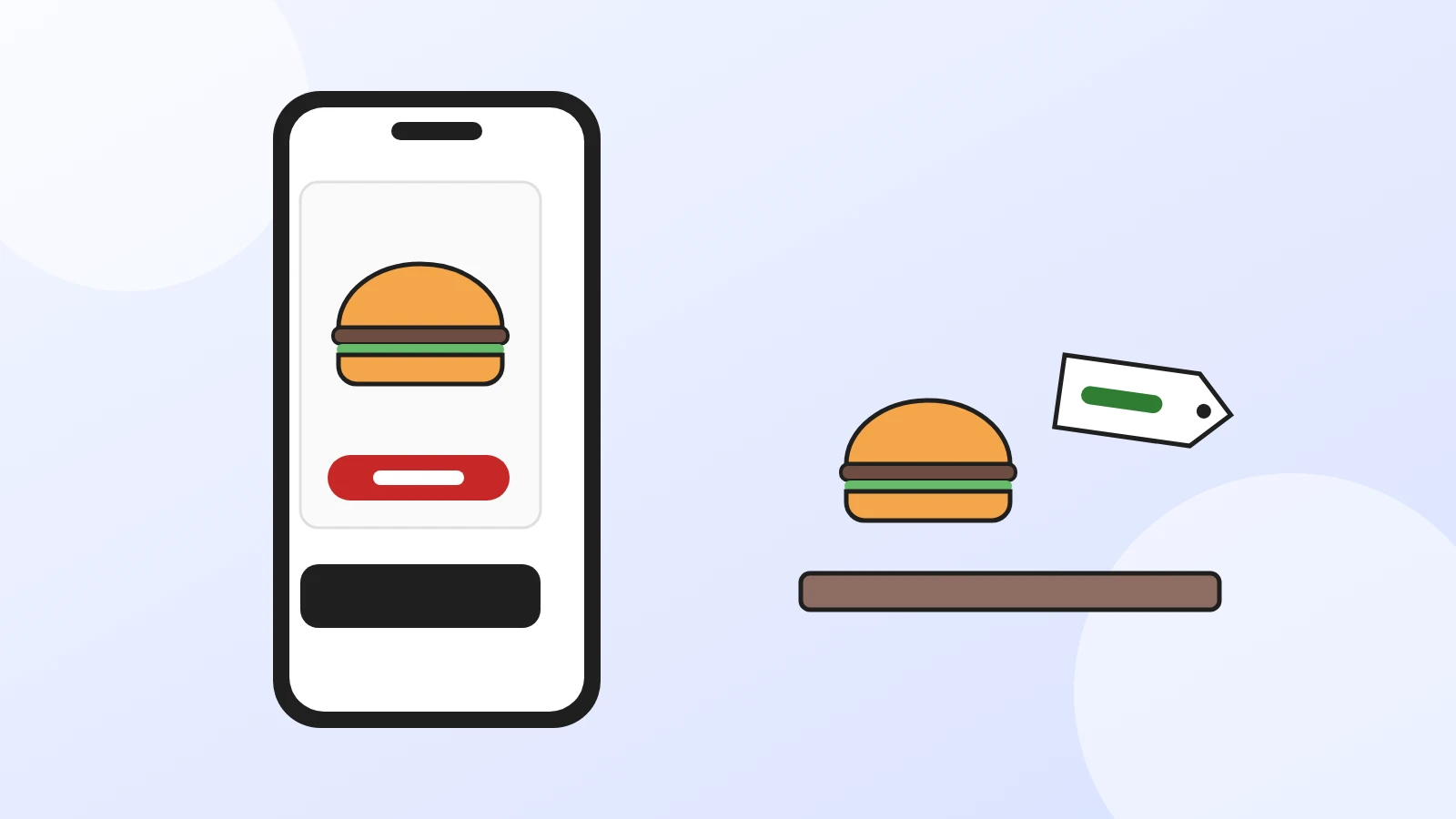
Yes, many restaurants charge more on DoorDash and Uber Eats than in store, and it's usually not greed. The apps take a commission on every order, often between 15% and 30% of the subtotal in the US, and each restaurant decides whether to absorb it or add it to its app prices. On top of that, the app adds its own delivery and service fees at checkout, which the restaurant never sees.
So when a guest says "it's cheaper if I call you", they're often right. This guide explains where the difference goes, how to price your app menu without feeling like you're hiding something, and how to give regulars a cheaper way to order.
The short version
- The restaurant sets item prices on the app; the platform sets its delivery and service fees.
- A higher app price usually pays the commission, not extra profit.
- The break-even formula: app price = in-store price ÷ (1 − commission).
- Be consistent. A similar markup on every item feels fairer than random jumps.
- Give regulars a direct option at your normal prices.
Why are prices higher on delivery apps?
Three things stack up on an app order:
| Part of the price | Who sets it | Who keeps it |
|---|---|---|
| Item prices on the menu | The restaurant | The restaurant, minus the commission |
| Commission on the order subtotal | The platform's plan | The platform |
| Delivery fee and service fee at checkout | The platform | The platform |
| Tip | The customer | The courier |
DoorDash publishes its US plans on its merchant pricing page: a commission of 15% on Basic, 25% on Plus and 30% on Premier for delivery orders, and 6% on pickup orders. Uber Eats also works with plans and percentages that vary by plan and country, shown on its merchant pricing page. The platforms say they don't add a markup to the restaurant's prices themselves; DoorDash told QSR Magazine that it doesn't require restaurants to match in-store prices, while recommending they stay close.
That leaves the restaurant with a choice: keep store prices and earn less per order, or raise app prices to cover the commission.
How much do restaurants usually raise their app prices?
There's no official average, and published comparisons are small samples. It depends on the restaurant, the city and the plan: some keep store prices, others add a clear markup.
What you can do is work out your own number.
How do you set your app prices fairly?
Start from the amount you want to keep per item. The formula that keeps it the same as in store is:
App price = in-store price ÷ (1 − commission rate)
Here's what that means for a $15.00 item (example; use your own prices and rate):
| Commission | App price that keeps $15.00 | Increase |
|---|---|---|
| 15% | $17.65 | +18% |
| 25% | $20.00 | +33% |
| 30% | $21.43 | +43% |
Notice that to recover a 30% commission you need more than a 30% increase, because the commission is taken from the higher price too. That's why many restaurants choose a middle ground: a partial increase that keeps them competitive in the app and accepts a smaller margin there.
A few rules keep it fair:
- Same portions as in store. A higher price for a smaller portion is what really upsets guests.
- A similar markup across the menu, rounded to normal-looking prices.
- Watch item by item. Use a menu engineering pass to see which dishes still sell on the app at the new price.
- Re-check when your plan changes. Moving from one plan to another changes the formula.
Is charging more on the app unfair to guests?
Not if it's the honest cost of the channel. The guest gets convenience: delivery to the door, a saved card, tracking. The restaurant pays for that convenience through the commission. Pricing it in is the same thing a hotel does on a booking site.
What feels unfair is surprise. So be open about it:
- Say it where regulars see it. A line on your own menu or receipt: "Order direct for our in-store prices."
- Don't hide fees in portions or quality. Keep the app experience as good as in store.
- Offer a cheaper channel. That turns a complaint into a reason to order from you.
How do you give regulars a cheaper way to order?
This is where the price difference becomes an advantage. Guests who already know you can order directly, and you keep your normal prices because there's no commission.
- Put your direct ordering link and QR code in every bag and on every receipt.
- Link it from your profiles: Google Business Profile, Instagram and your website.
- Make it fast: a clean mobile menu with photos and a simple checkout.
- Keep the apps for new customers who haven't found you yet.
With Acuolina, guests order from your own menu and the order reaches you on WhatsApp or by SMS. There's no commission per order, guests pay you directly, and the same menu works at the table through its QR code. The full math of an app order against a direct one is in our commission-free ordering vs delivery apps guide.
Should you stay on the delivery apps at all?
Usually yes, but for the right job. Apps are good at introducing you to people who've never heard of you, and less good at serving the regulars who would order from you anyway. We look at that question in are delivery apps worth it for restaurants?
For more ideas, read how to increase restaurant sales, browse our online ordering articles, or set up direct ordering and let your regulars pay your normal prices.
Frequently asked questions
Do restaurants charge more on DoorDash and Uber Eats?
Many do. The platforms let each restaurant set its own app prices, and a lot of restaurants raise them to cover the commission on each order. Some keep the same prices as in store and absorb the cost. Check a few items on the app against the restaurant's own menu to see which one a place chose.
Is it legal for a restaurant to charge more on delivery apps?
In general, yes. Restaurants set their own prices, and the platforms say they don't add a markup to menu prices themselves. What matters is that the price shown is the price charged; local consumer rules on how fees are shown at checkout still apply.
Who sets the prices on DoorDash?
The restaurant sets its item prices. DoorDash sets its own delivery and service fees, which it shows to the customer at checkout and keeps. So an app order can cost the customer more even when the item prices match the store.
How much should I raise my prices on delivery apps?
To keep the same amount per item as in store, divide your in-store price by one minus the commission. A $15 item at a 30% commission becomes about $21.43; at 15% it's about $17.65. Many restaurants raise prices less than that and accept a smaller margin to stay competitive in the app.
Will higher app prices hurt my ratings?
They can if guests feel surprised. Being consistent and fair helps: similar markups across items, the same portions as in store, and an easy way for regulars to order from you directly at your normal prices.
How can customers pay in-store prices for delivery or pickup?
By ordering from the restaurant directly. With Acuolina, guests order from your own menu link or QR code and the order reaches you on WhatsApp or by SMS, with no commission per order, so you can keep your normal prices.
Keep reading
Online ordering
Commission-Free Online Ordering vs Delivery Apps
DoorDash charges restaurants 15% to 30% on delivery orders. See the math on a real order and when commission-free online ordering pays off.
Online ordering
Are Food Delivery Apps Worth It for Restaurants? (2026)
Delivery apps pay off as a marketing cost, not as your main sales channel. How to measure what an app order really costs and when to move regulars to direct.
Restaurant marketing
How to Increase Restaurant Sales: 10 Practical Tips
Ten free, practical ways a small restaurant can sell more: a bigger average order, guests who come back, fuller slow days and direct orders with no commission.
Your first direct order, tonight.
Create your menu in minutes and get every Chef feature free for 14 days. Then stay on Basic for free, or upgrade.